How I Write
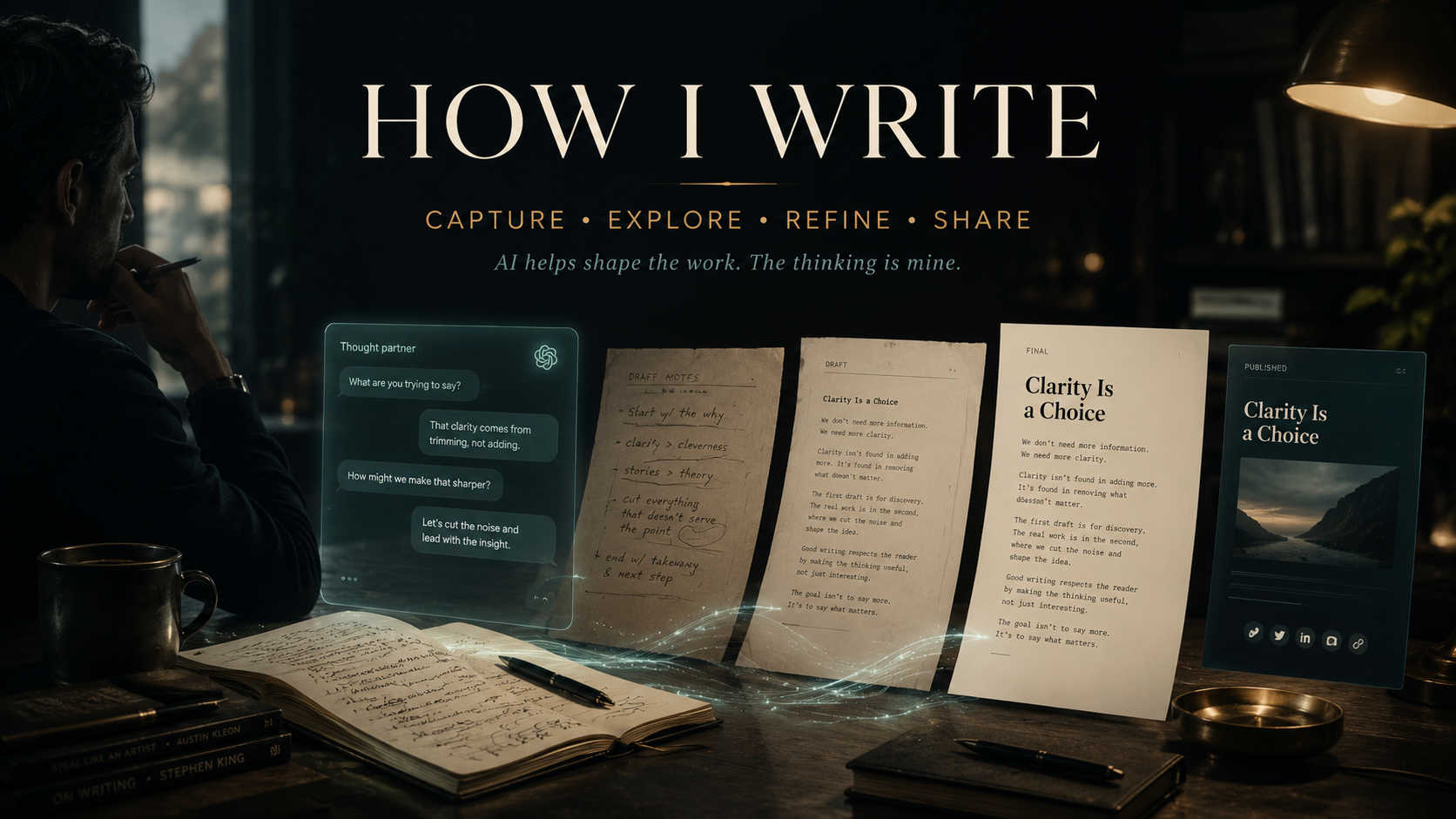
AI is part of my writing process for every article on this site.
The ideas, experiences, opinions, and conclusions are my own. They come from years spent leading operations, technology, and AI implementation within human-centered organizations.
My role in the process is to synthesize those experiences into observations, ideas, and frameworks that I believe are worth sharing. I use AI to help organize those ideas, pressure-test my thinking, explore alternative structures, improve clarity, and handle much of the editorial work that transforms rough thinking into a polished article.
Most pieces begin as dictated thoughts or observations collected through my day-to-day work. From there, the writing becomes a conversation. I react to drafts, reject weak arguments, reorganize sections, refine language, and continue pushing on the ideas, framing, language choice, and tone until they accurately reflect what I believe, what I've learned through experience, and my personal voice. Sometimes I accept suggestions immediately. But more often, I use AI's initial synthesis or organizational approach as the starting point for a better expression of what I was trying to communicate.
That process has fundamentally changed where I spend my time.
Before AI, taking an idea from a notebook to a published essay required me to personally complete nearly every step in sequence: organizing notes, outlining, drafting, editing, researching publishing tools, learning new software, building a website, and solving the countless technical problems that come with creating something new.
Today, much of that work happens in parallel. Instead of waiting to finish one task before beginning the next, I can move several parts of a project forward simultaneously. While I'm refining an argument, AI helps organize a draft. While I'm deciding whether a framework accurately reflects my worldview, another AI agent might be researching website platforms, comparing implementation options, or building pieces of the technical infrastructure that support this site.
The result isn't that the thinking becomes automated.
It's that ideas move from observation to something useful much more quickly because I can spend a greater percentage of my time doing the work where my experience creates the most value, while spending less time on the supporting work required to get them there.
I don't use AI because I believe it replaces expertise. I use it because it allows me to spend more of my time applying my expertise in ways I find compelling.
The same pattern extends beyond writing. Whether I'm designing an internal application, improving a workflow, or building a new process, the work still begins by understanding people, identifying problems worth solving, and defining what success should look like. AI isn't responsible for those things. It helps me transform those decisions into working software, polished writing, prototypes, and other tangible outputs far more quickly than I could on my own.
This page exists because I think the process matters.
One thing I've learned through this process is that successful use of AI isn't measured by how often I accept its suggestions. Some of the strongest ideas on this site emerged because the initial synthesis, framing, or organizational approach didn't quite match what I was trying to communicate. Reacting to those drafts often helped me better articulate what I actually believed, even when very little of the original suggestion remained.
The value for me isn't that AI produces finished work. It's that the process helps me arrive at a stronger expression of my own thinking.
If this site encourages a thoughtful, human-centered approach to AI, it felt important that the way it's created reflects that same philosophy.